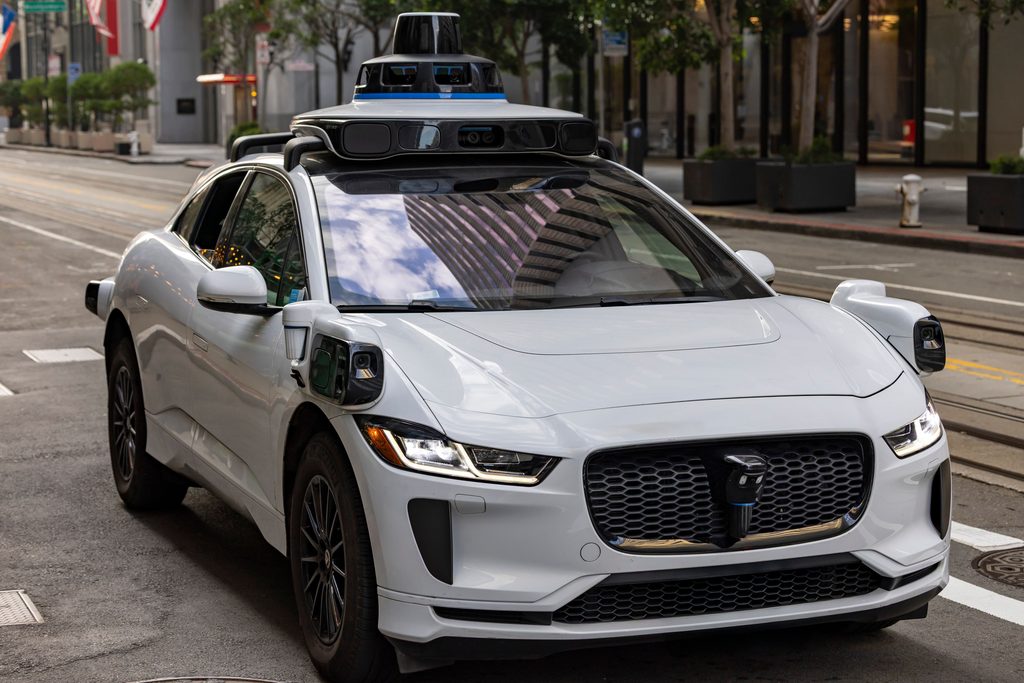
Waymo's driverless taxis are off every freeway in the country after California regulators banned the vehicles from state highways and the company voluntarily pulled back in its other markets.
The California Department of Motor Vehicles (DMV) ordered the halt Nov. 11, citing what it called "an imminent hazard to public safety," the AP reported. Three Waymo vehicles had entered an active construction zone on U.S. Route 101 near Burlingame on Nov. 5, according to DMV spokesperson Jonathan Groveman. The next day, a Waymo car tried to pass California Highway Patrol vehicles conducting a traffic break on Interstate 280 in San Francisco.
The DMV said those incursions came "despite prior restrictions and corrective actions implemented following similar incidents," according to ABC News.
No injuries or collisions resulted from the November incidents, Waymo said.
A pattern of construction zone failures
The freeway trouble stretches back months. On April 11, a Waymo robotaxi drove past ramp-closure signs into a construction zone in Phoenix, according to a federal safety recall report Waymo filed with the National Highway Traffic Safety Administration (NHTSA). Five similar events followed on April 19 in Phoenix. On May 18, seven Waymo vehicles entered active lane closures in the San Francisco Bay Area by driving between cones.
Waymo's recall report said the vehicles' automated driving system could "enter and drive at speed in freeway construction zones due to inappropriately prioritizing the avoidance of other freeway hazards and/or failing to recognize the construction zone."
The company paused freeway rides in May, filed a recall covering 3,871 vehicles in June and deployed a software fix by June 29, according to EV reporting on the recall history. Freeway rides resumed in late July, starting in Phoenix.
Two more recalls filed
On Nov. 19, Waymo filed two additional recalls with NHTSA, the Straits Times reported. One covers vehicles that may enter and keep driving in a closed freeway lane. Waymo said it is still working on a fix for that problem.
The second recall addresses how the vehicles respond to police officers or emergency personnel directing traffic at intersections. It followed a collision in which a Waymo vehicle initially followed an officer's directions, but the officer then became temporarily obscured from the vehicle's view. Waymo did not disclose where or when that collision happened, or whether anyone was hurt. The software update for that recall was completed Nov. 6, the company said.
Those are Waymo's fourth and fifth recalls of 2026, according to NHTSA's database.
What it takes to get back on freeways
California's restrictions bar both driverless operations and testing on state freeways. They will stay in place "until Waymo demonstrates to the Department that it has taken effective corrective actions to address the deficiencies that precipitated the restrictions," Groveman said, according to the AP. The DMV has not set a date.
Outside California, the pause is Waymo's own decision. A Waymo spokesperson told the AP the company has "temporarily restricted commercial freeway rides in all markets" but is "continuing freeway testing with trained autonomous specialists behind the wheel."
Waymo's ride-hailing service continues on surface streets, where it serves more than half a million trips a week, a company spokesperson told ABC7.
Billy Riggs, a professor at the University of San Francisco, told ABC7 that autonomous vehicles remain safer than human drivers overall but face expected growing pains. "An automated vehicle can understand and identify all the aspects of the roadway and make really sophisticated judgments on them. But, many times, it can't understand context," Riggs said.
What this means for New Jersey
Waymo has been mapping parts of Jersey City, Hoboken and the area around Newark Liberty International Airport since 2025, with a human driver behind the wheel, according to Dock Duty. New Jersey has no law authorizing driverless testing or paid driverless rides.
A bill in the state Legislature, S1677, sponsored by Senators Andrew Zwicker and Gordon Johnson, would create a three-year pilot program. Under the Senate committee substitute adopted May 11, companies would need to complete at least 50,000 crash-free miles of supervised testing before going driverless. The bill would also bar autonomous vehicles from school zones, construction zones and high-collision pedestrian areas, according to CleanTechnica.
As of Nov. 2, neither S1677 nor its Assembly companion, A3968, had received a floor vote in either chamber.
Waymo's California record underscores the construction-zone restriction in the New Jersey bill. The company's own recall filings show its software has struggled repeatedly with the same category of hazard the proposed state law would place off-limits.