Berkeley Heights property owners are about to be on the hook for roughly $2.5 million in new sewer infrastructure spending, backed by the township's unlimited taxing power. Nearly a third of that total has no public explanation for where it's going.
Why your tax bill is the real backstop here.
The Township Council introduces Ordinance 2026-18 Tuesday, authorizing $2.4 million in bonds plus $106,000 from existing budget funds. The township would pledge its "full faith and credit" to repay the debt — legal language that means it can raise property taxes without limit on rate or amount if needed to cover principal and interest. In plain terms: if something goes over budget, homeowners are the backstop.
What the money is supposed to fix.
The spending covers three things: designing a new Hampton Drive force main, upgrading switchgear equipment and electrical transfer systems, and assessing the Hampton Drive and Twin Falls pump stations. The $390,000 switchgear design would be financed through the NJ Infrastructure Bank's low-interest loan program — the same financing tool Mayor Angie Devanney credited earlier this year with helping the township's wastewater treatment plant hit full state compliance in 2025, its first violation-free year in at least a decade. Pump station assessments account for another $115,000, and roughly $1.2 million appears — though isn't explicitly stated — to cover the force main design itself.
The $800,000 question nobody's answered yet.
That leaves $800,000 filed under "Section 20," a catch-all category in state bond law covering engineering, legal and administrative costs. The law requires towns to disclose the total amount for these ancillary expenses — but not how it splits across individual projects. That gap is exactly what local news site nj21st.com flagged in a July 18 analysis, with writer John Migueis asking the council to explain "what the 2025 Hampton Drive inspection found, how those findings relate, if at all, to the decision to design a new force main, what the $2 million estimate includes and how much of the $800,000 Section 20 ceiling is connected to each of the three projects."
Why verbal reassurances won't help you later.
Migueis also raised a sharper point: whatever officials say out loud at the meeting doesn't actually bind how the money gets spent. "If it is not in the ordinance being adopted, those statements do not limit how the money may actually be used." In other words, if residents want real accountability, it needs to be written into the ordinance itself — not just promised verbally at a podium.
What's missing from the public record entirely.
There's no published interest rate, total borrowing cost, projected annual debt payments, or estimate of how this affects sewer fees or the broader municipal budget. Inspection reports, engineering documents and cost estimates haven't been released either.
How to weigh in.
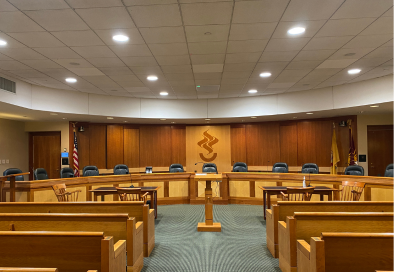
Tuesday's vote is only for introduction. The public hearing and final adoption vote are set for Aug. 11 at 6:30 p.m. at the Municipal Building, 29 Park Avenue. Residents can attend in person or call 908-464-2700 to learn how to submit comments before the final vote.