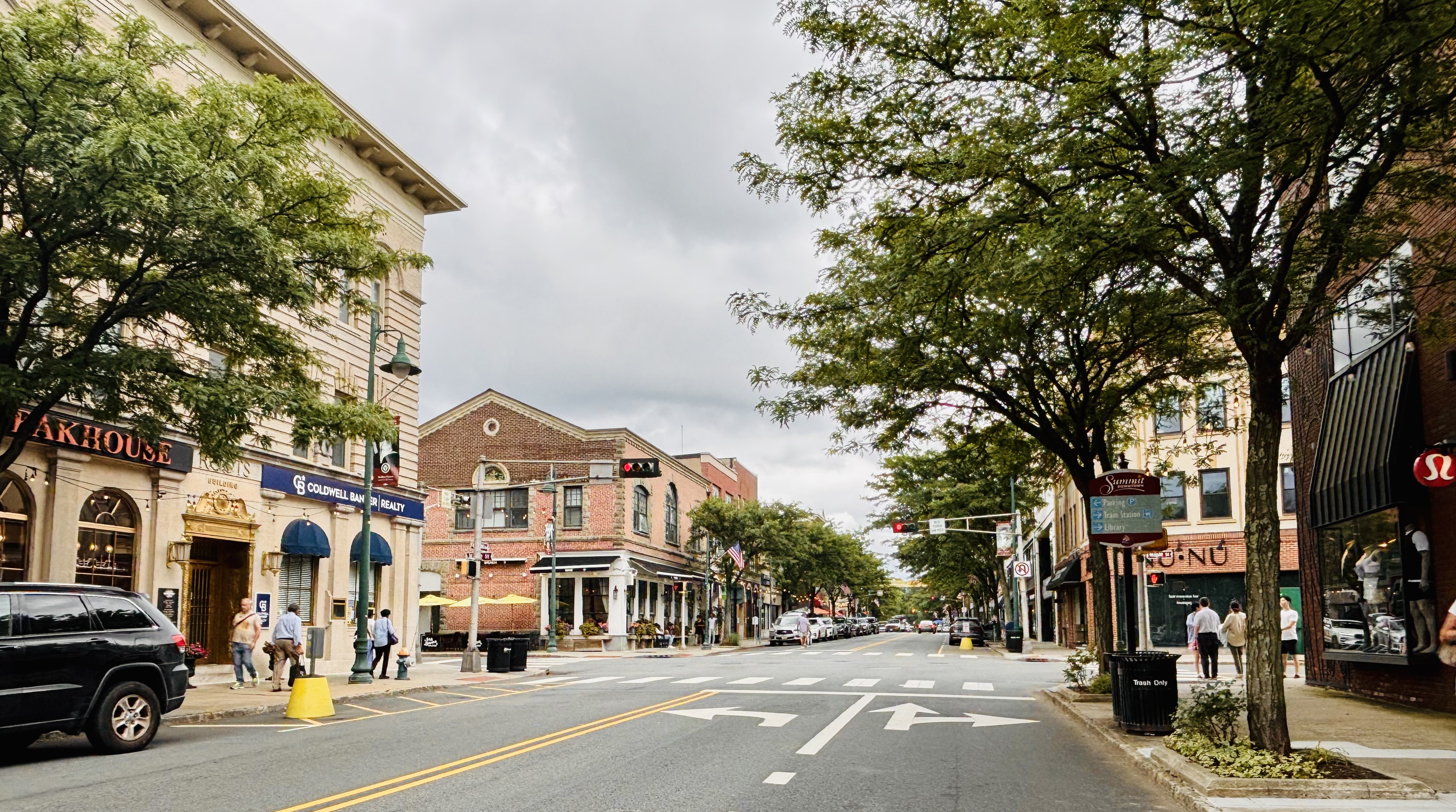
New Jersey finished last among all 50 states for business friendliness in CNBC's 2026 America's Top States for Business rankings. For employers along Springfield Avenue and across the Summit area, the result quantifies what local shop owners already feel: the nation's steepest business costs.
The rankings, released July 9, evaluated states on 138 metrics across 10 categories. New Jersey placed 31st overall, down from 30th in 2025 and a sharp fall from 19th in 2023. The state scored 50th in business friendliness, 41st in infrastructure, and 38th in cost of doing business.
It also trailed all three neighboring states: Pennsylvania ranked 13th, New York 18th, and Connecticut 23rd.
New Jersey's 11.5% top corporate tax rate is the highest in the nation, according to the New Jersey Business & Industry Association. Pennsylvania, by comparison, is on a path to lower its top corporate rate to 4.99%.
"Obviously, we didn't arrive here in the short term," NJBIA President and CEO Michele Siekerka said in a July 9 statement responding to the rankings. "New Jersey employers have endured decades of anti-business policies, and our state has a reputation for not being business friendly."
Siekerka pointed to WARN Act notices totaling more than 9,000 jobs in 2026 and cited a Focus NJ analysis finding the state lost at least 7,000 jobs, nearly $675 million in annual payroll, and roughly $27.3 million in annual income tax revenue due to companies choosing to invest elsewhere. She called for "a true reform agenda and economic growth strategy now, with a clear, intentional path to driving down business taxes and burdens."
NJBIA identified specific recent policies weighing on employers: the Corporate Transit Fee that maintains the 11.5% tax rate, changes to the ABC test for independent contractors, the Climate Superfund bill, and a new Medicaid-related employer tax in the FY2027 budget that took effect July 1.
Tom Bracken, president and CEO of the New Jersey Chamber of Commerce, called the 50th-place finish "perhaps most alarming" in a statement reported by TAPinto Summit.
What it means locally
For Summit-area businesses, the ranking underscores a familiar tension. The state's second-place finish in education and third-place quality-of-life score help local shops attract customers and workers who value top-rated schools and proximity to New York City. But those advantages come packaged with the nation's steepest business costs.
Infrastructure is a particular pressure point. New Jersey's infrastructure ranking plunged from 21st in 2025 to 41st in 2026, the steepest single-year drop among all state categories. CNBC made infrastructure its top-weighted category for the first time this year, reflecting the growing importance companies place on reliable transportation, utilities, and permitting. Summit employers and commuters depend on NJ Transit rail service to reach Manhattan.
Governor Mikie Sherrill, who took office in January 2026, has launched a "Saving You Time and Money" agenda aimed at reducing permitting delays. NJBIA praised the initiative but noted the new state budget simultaneously added tax increases.
No specific timeline has been announced for the permitting reforms. Summit Downtown, Inc., which manages the Springfield Avenue commercial district, did not respond to a request for comment on the ranking's local impact.