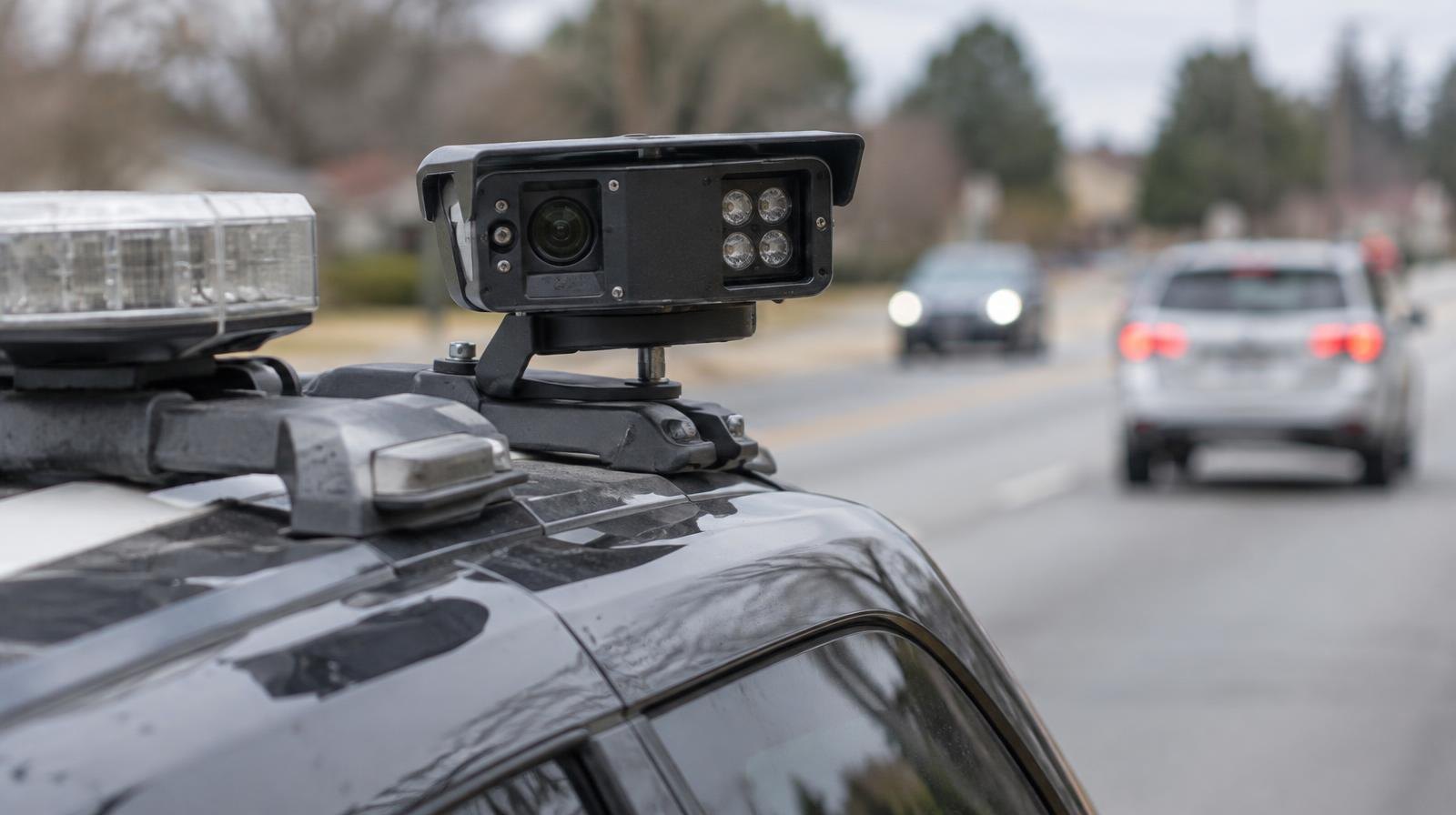
Two bills introduced in Trenton would overhaul how New Jersey police departments collect, store and share license plate reader data.
The proposals, Assembly bills A5483 and A5637, would impose strict deletion timelines and new oversight requirements on every department that uses automated license plate readers, or ALPRs. That includes Summit, New Providence and Berkeley Heights, all of which operate the technology, as NJ21st reported Oct. 18.
A5483, sponsored by Assemblyman David Bailey Jr. of District 3, would require departments to automatically delete ALPR data within two days of collection. Data could be kept longer only with a judicial warrant, a court order or a specific law-enforcement request identifying the data as evidence of enumerated unlawful conduct. The bill would also ban private use of the readers entirely and require every government agency operating them to post annual audit results on its website and report them to the Attorney General.
A5637, introduced Oct. 15 by Assemblyman Joe Danielsen of District 17, takes a different approach. It would set a 90-day deletion window and require officers to obtain a judicial warrant before accessing ALPR data on any vehicle tracked at two or more locations. The bill would create a State ALPR Coordinator to oversee the program statewide. It would also require that individuals be notified within 15 days when their plate data is shared with out-of-state or federal agencies.
Both bills were referred to the Assembly Public Safety and Preparedness Committee.
Under current rules set by a New Jersey Attorney General directive, departments may retain ALPR data for up to three years, according to Shore News Network. Either bill would dramatically shorten that window.
The legislation arrives as local ALPR oversight has drawn scrutiny. An investigation first reported by NJ21st in September found that Berkeley Heights reported 36 minor ALPR violations over 2024 and 2025 but told the outlet no records existed describing what those violations involved or how the department responded. Summit reported four significant violations in 2024 tied to missing or incorrect case numbers and retrained officers. New Providence logged violations centered on case-number and documentation issues and also implemented retraining.
Berkeley Heights' 2024 audit also showed the department answered "No" to questions about whether it maintained required training records, retained audit data for three years, had every vendor certified and restricted data access to authorized users only, NJ21st reported.
Summit Councilman Dan Crisafulli said Sept. 15 that the city's plate readers help police deter thefts and solve crimes, and that their public-safety value outweighs privacy concerns. "For now, the benefits are running far ahead," Crisafulli told Shore News Network.
Summit's annual crime report showed 199 major offenses in 2025, down from 269 in 2022, according to Shore News Network. The report did not establish that ALPR use caused the decline.
A5483 would require public posting of audit results, a step that could change how residents in all three towns access compliance information about their departments. Under the current Attorney General directive, audits are conducted internally and are not required to be published online.
The Assembly Public Safety and Preparedness Committee is scheduled to meet Monday, Oct. 19.